
2026-09-13 · Season 1 · Ep. 6
A human ear lets the line through
The Korean you practice only ships after a person says OK — not after the model drafts it. Plus 메뉴판 and the real origin of 리즈 시절.
This is Season 1, Episode 6 of building UpKorean in public.
One sentence:
The Korean line you speak in the app only goes out after a human ear says OK — not because it looked fine on a screen, and not because an AI drafted it last night.
Season 0 was why this system. Season 1 is what holds it up. Below is how we got to that sentence — then two Korean asides for color.
Why that sentence exists
A lot of language apps feel like sentences were poured into the UI and left there. If an ending is wrong, fixing it somehow means “ship a new app.”
We do not want that. Practice lines live as lesson files with a status. Drafts stay drafts. Only published reaches learners. AI can help write a first pass under our rules (해요체 (haeyoche) living speech, slots, politeness). Then a person — founder and a few fluent reviewers — has to hear it as something a real mouth would say. Not a “certified teacher” badge on the landing page. An internal gate: no → not this.
If that gate is missing, “speaking practice” means practicing the model’s bad habits. With it, the catalog can grow without lying to your mouth.

The moment that proved it (to me)
Early AI-shaped drafts drifted. Wrong particle in a slot. Stiff ending where cafe speech should be soft. Textbook 을/를 (eul/reul) glued onto a line that living counters usually drop. Lint caught some of it. The rest needed a human no.
We also made a simple fields editor so a line like 주세요 (juseyo) can be fixed without living inside a giant blob. Same idea: change the lesson that learners hear, not the product skin.
Aside: 메뉴판 (menyupan)
Korean for the thing you order from: 메뉴판 (menyupan) — menu board / booklet.
You do not rebuild the kitchen every time the soup changes. You update the board. Guests trust that what is printed is what they can ask for. Our lessons should work the same way: written down, checked, then shown.
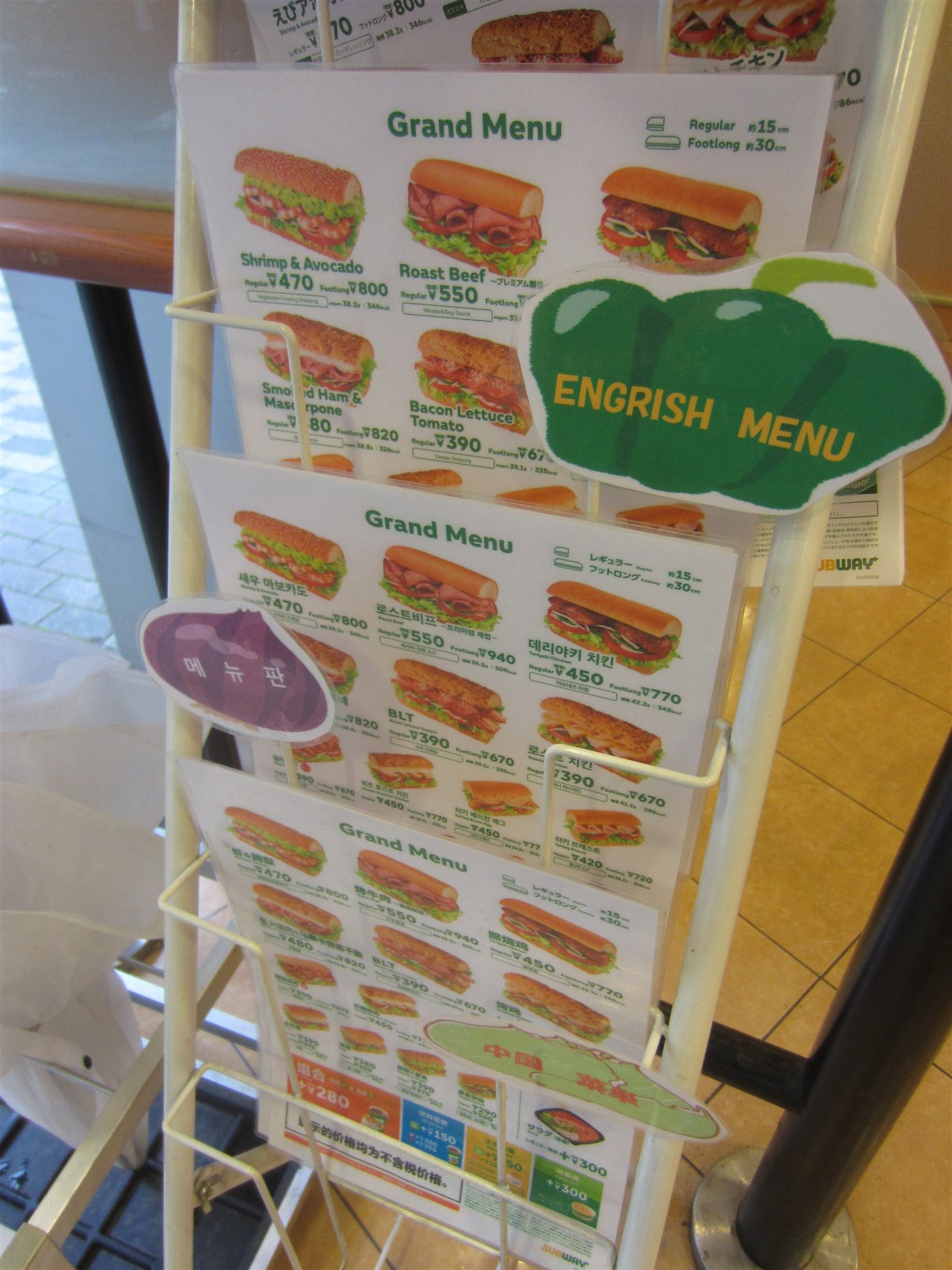
I like that the Korean leaflet in that photo is literally tagged 메뉴판 (menyupan). The orderables are on the board. Ours should be too.
Aside: 리즈 시절 (rijeu sijeol) — where “peak” came from
Today 리즈 시절 (rijeu sijeol) means someone’s prime — looks, form, career high. “리즈 시절 (rijeu sijeol) 사진 (sajin)” ≈ “peak photo.” It does not literally mean Leeds United anymore. Here is the path I know.
Late-1990s Korea was in the IMF years. TV often carried a 국난극복 (gungnanggeukbok) mood — get through the national trouble together. Sports stars held a lot of that energy: 박세리 (Bak Seri / Park Seri) in golf, 박찬호 (Bak Chanho / Park Chan-ho) with the Dodgers. For many people the emotional high was the 2002 Korea–Japan World Cup.
박지성 (Bak Jiseong / Park Ji-sung) goes to the Netherlands with Hiddink, then to the Premier League under Ferguson at Manchester United. Korean 맨유 (Maenyu) fandom explodes. Among the teammates people knew: 앨런 스미스 (Aelleon Seumiseu / Alan Smith) — blonde, green-eyed, “classic” European look. Not Korea’s biggest star, but known.
Smith came from 리즈 유나이티드 (Rijeu Yunaiteideu / Leeds United), where he had been a real standout — the form that got him to Man Utd. At Manchester his impact was quieter. Fans said 앨런 스미스의 리즈 시절 (aelleon seumiseuui rijeu sijeol) — Alan Smith’s Leeds days. Then Alan Smith fell out of the phrase. Only 리즈 시절 (rijeu sijeol) remained: slang for anyone’s peak.
Language apps sometimes sell a 리즈 시절 (rijeu sijeol) fantasy — drama fluency, endless glow — while the practice board is thin or unchecked. That twists the slang. We would rather keep an honest 메뉴판 (menyupan): fewer dishes, each one edible. Peak marketing can wait until a human ear has let the line through.
Where absolute beginners fit
Cannot read Hangul yet? Public door: upkorean.com/hangul. Entry hook — not “we are an alphabet app.” After you can sound out blocks, same rule: reviewed lines only, mic included.
Soft invite
Hangul + the first cafe scenario stay free. Soft invite only — I’m still building in public.
Next
Episode 7: listen → pattern → slot → speak — why every lesson ends with your mouth.
- learn Korean
- Korean lessons
- human review
- 해요체 (haeyoche)
- 메뉴판 (menyupan)
- 리즈 시절 (rijeu sijeol)
- building in public
- UpKorean
- Hangul
- Korean speaking practice