
2026-08-30 · Season 0 · Ep. 4
Drawing the IP line
Why UpKorean doesn't use K-pop lyrics or K-drama clips as lesson bait — interest vs license cost, what YouTube clip classes get right, and why we bet on original scenarios instead.
This is Season 0, Episode 4 of building UpKorean in public.
Episode 1 was the learner bottleneck. Episode 2 was the product gap. Episode 3 was web / PWA instead of default app stores. This one is about content rights:
Why we don’t use K-pop lyrics, K-drama clips, or idol photos as lesson bait — and what we’re building instead.
The temptation is real
I’m not going to pretend K-culture pull doesn’t exist.
A lot of English speakers discover Korean because they already care about 드라마 (deurama), music, or the wider 한류 (hallyu) — the Korean wave. That motivation is real. Clip-based study can raise interest. I’ve watched many English “drama clip → vocab / expression” lessons on YouTube — different channels, more than once. The hook works: you already like the scene, so you lean in.
I also don’t think that lane is a joke niche forever. The fan layer is still minor compared to mega apps, but it’s there. Maybe it gets louder. Maybe someday UpKorean is big enough that license economics stop looking insane.
So this episode is not “K-content learners are wrong.” It’s narrower:
For this product, right now, borrowed pixels are the wrong default — mostly because someone pays, and I don’t want that bill quietly landing on learners.
YouTube clips ≠ a paid app template
There’s a class difference people blur when they say “everyone uses drama clips on YouTube, so it must be fine.”
| Typical free “drama clip lesson” channel | UpKorean (paid-capable web app) | |
|---|---|---|
| Media | Often third-party show footage | Needs a license or 100% original work |
| Business | Ads / Patreon / gray commentary culture | Subscriptions possible → commercial use weighs heavier |
| Risk bearer | Usually not you as the learner | Us as the operator — takedowns, claims, price pressure |
| Speak loop | Watch + vocab; mic varies | Mic + feedback every lesson — we must control the script |
Desk note, not a court filing: Korean fair-use is narrow; “educational” doesn’t automatically bless a for-profit language app. The “under 15 seconds is fine” rule is a myth in practice — even a second of iconic footage can be a problem when you’re building a business on it.
YouTube channels can feel fine until they aren’t. A PWA you might pay for is a different risk profile. I’m not dunking on creators; I’m saying their class isn’t our class.
The cost line — why “just license it” isn’t MVP
When I say we’re not copying clip lessons, people hear “technically impossible.” That’s not what I mean.
Technically, a studio deal exists somewhere. Economically, for a small Korean operator building a speaking tutor, it looks bad 가성비 (gaseongbi) — bad value for money.
Desk orders of magnitude (trade commentary, not a quote):
| Path | Rough economics | MVP fit for us |
|---|---|---|
| License broadcast / drama masters | Often $2k–10k+ per episode territory + slow deals | No — startup-hostile |
| License platform like Lingopie’s class | Their moat is the catalog deal (learners pay ~$6–14/mo tier desk reviews cite for all-you-can-watch licensed libraries) | Different business — we’re not cloning Netflix rights |
| Original audio scenes + Neural TTS | Cents of TTS + founder authoring hours | Yes — matches our stack today |
| Original stills / light art | $0–300 batches desk-estimated | Yes — interest without video infra |
| Original short video (owned) | Mostly founder time; ~$500–1.5k/season if light paid help | Later — after catalog depth gates |
The pattern serious language products follow (desk map): Duolingo / TTMIK ship owned curriculum; Teuida ships filmed original scenes, not licensed hit dramas; Lingopie sits in the rights-catalog bucket. Nobody I trust for MVP builds on stolen pixels. That’s a product-class line for what we ship — not a knock on free clip teachers or learners who love that lane.
If we licensed iconic clips, some of that cost would show up in your price. Episode 3 already said store fees work the same way. I’m consistent: cheaper honest path beats borrowed hype for this wedge.
“Maybe later” — without pretending today is that day
I’m hedging on purpose.
If 한류 (hallyu) demand gets loud, and UpKorean can carry license fees without turning Plus into a luxury tax, we could reconsider. I’m not signing a forever “never drama.” I am saying:
Today, with an early catalog and a speaking-first MVP, licenses are not on the table — not because learners “shouldn’t” want clips, but because I don’t want learner price to subsidize studio economics before we’ve earned the right to try.
That’s a design bet, not legal advice.
What we’re building instead
The job clip lessons solve is legitimate: interest + “this feels real.” The legal-safe way to get that job is original expression we own:
- Scenario scripts — cafe, convenience store, introductions — written for pattern slots and 해요체 (haeyoche) speak targets, not for meme lines from a hit show.
- Audio scene-drills — multi-voice listen → explain → slot → mic, using Azure Neural TTS on our text (already in the pipeline).
- Later: serialized original story (“UpDrama”) — drama shape, our copyright. No Squid Game thumbnail bait.
Generic fandom language — concert small talk, fan-letter phrases, variety-show expressions as vocabulary — can exist without idol photos or lyric paste. Words and common phrases aren’t the trap; their assets are.
Generation guardrail (process, not lore): lesson prompts carry our scenario spec only — no competitor text, no “write it like Episode 7 of Show X.” Human review also screens for accidentally too-famous lines.
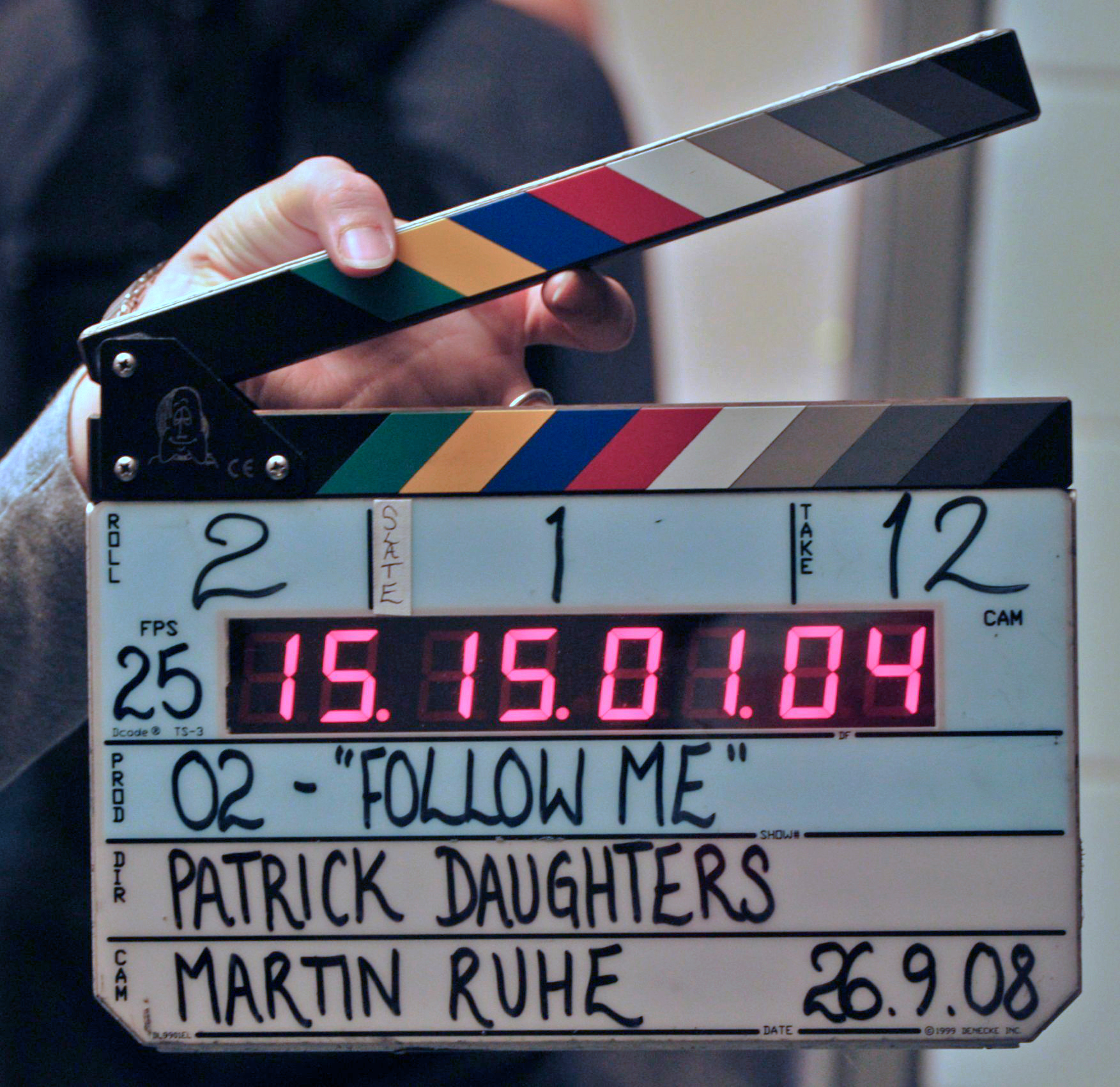
The clapperboard is a metaphor, not a flex. We’re not on a soundstage with a broadcast budget. We’re on a founder-hours budget, trying to make counter Korean feel alive without renting someone else’s scene.
A natural Korea-side beat — motivation vs bait
The section above said we can teach expressions without assets. Here’s what that looks like in practice.
One distinction I keep in my head:
- Motivation: “I started because I watch 드라마 (deurama).” Normal. Welcome.
- Product bait: “Swipe right into this clip so we don’t have to write.” Different thing.
Koreans don’t need a lecture on 한류 (hallyu). English readers might only need the shorthand: a lot of global Korean interest rides on culture exports — and that’s why clip lessons get clicks. UpKorean just isn’t built to mine those exports. It’s built to get you speaking in original situations that rhyme with daily life.
Same English word, different picture — 아파트 (apateu)
Music counts too — same split. A tiny loanword example — not a lyric lesson.
English speakers hear “apartment” and picture a flat: maybe a low-rise walk-up, maybe a high-rise rental — the word is broad. In Korea, 아파트 (apateu) is the same English loanword, but everyday usage is narrower: a tall managed complex — often 5+ floors, elevators, a 관리사무소 (gwalli samuseo) management office, the kind of block a huge share of Koreans actually live in. It reads closer to a North American condo tower in your head than to “any rental unit.”
Flip the map for low-rise housing:
| If you grew up in North America… | Rough Korean everyday label |
|---|---|
| “A 3-floor walk-up I rent” | 빌라 (billa) or 다세대주택 (dasedae jutaek) — low-rise multi-unit, not the default 아파트 (apateu) image |
| “A high-rise I rent” | Could still be 아파트 (apateu) — Koreans don’t define it by “owned vs rented” the way condo vs apartment often splits in the US |
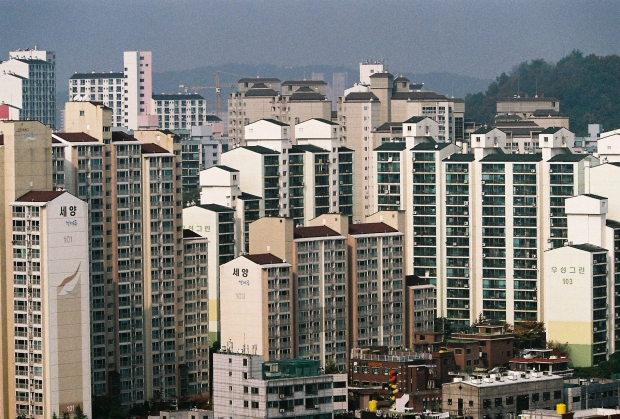
So when a recent global hit chants “APT / 아파트 (apateu)” (apateu), a lot of Koreans hear a drinking-game rhythm and high-rise life, not “lesson vocab for flat.” English ears hear “apartment.” Same spelling family, different baggage. That’s the kind of gap we can explain in a blog aside — we still won’t paste the chorus into a lesson.
What this means for you as a learner
If clip study is your joy, keep enjoying it — I’m not your dad.
If you want particles, politeness, and a mic loop without wondering whether today’s lesson line was lifted from a subtitle file, upkorean.com is the bet. Hangul + cafe are still free to try. Catalog is early. Soft invite only.
Next episode
Season 0 · Ep. 5 — The 90-day speaking path: travel-ready survival, not “fluency.”
Disclosure
Build log, not legal advice. Drama-clip YouTube = founder personal viewing; Lingopie / Teuida / Duo = desk map, not “I used them all.” License $ figures are order-of-magnitude desk, not quotes. Clapperboard: Mattbr / CC BY 2.0 via Wikimedia Commons. Seoul high-rises: Thomiccor / CC BY-SA 3.0 via Wikimedia Commons. Not from any show or idol promo. Screens and catalog change as we ship. I’m Korean; my English is good enough to ship, not native-perfect — if a line is unfair or too sure, tell us.
Series: Building UpKorean (Season 0 — origin).
- learn Korean
- UpKorean
- K-drama
- K-pop
- intellectual property
- copyright
- Hallyu
- 한류 (hallyu)
- 드라마 (deurama)
- 아파트 (apateu)
- building in public
- indie founder